Strengthening Cooperation and Diversifying Resources for the Sustainable Development of Children
Cập nhật lúc: 19/10/2026 106
On the afternoon of July 30, the workshop entitled “Strengthening Cooperation and Sharing Experiences in the Implementation of Development Projects and Humanitarian Assistance” continued with thematic discussion sessions focusing on lessons learned from partnerships, resource mobilization strategies, and the development of new cooperation models to enhance the effectiveness of child-focused development programmes.
The discussion and experience-sharing session was co-chaired by Ms. Le Thi Thanh Huong, Country Representative of Save the Children International in Viet Nam, and Ms. Pham Thi Minh Hien, Deputy Director of the Department of Health.
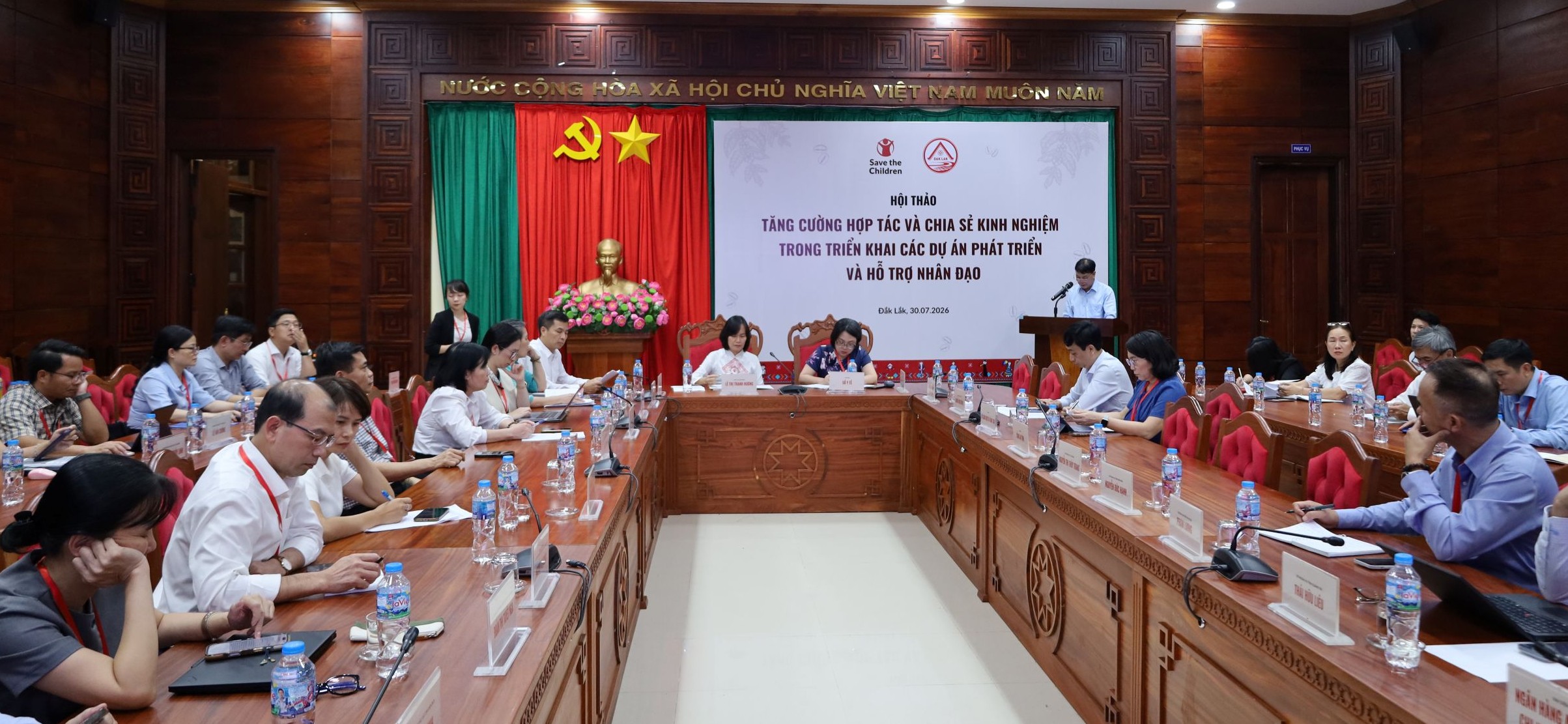
Delegates attend the workshop’s discussion session.
Dak Lak Shares Experience in Building Development Partnerships
At the discussion session entitled “Lessons from Cooperation and Positioning Save the Children for the New Phase”, representatives from various localities shared effective partnership models with international organizations.
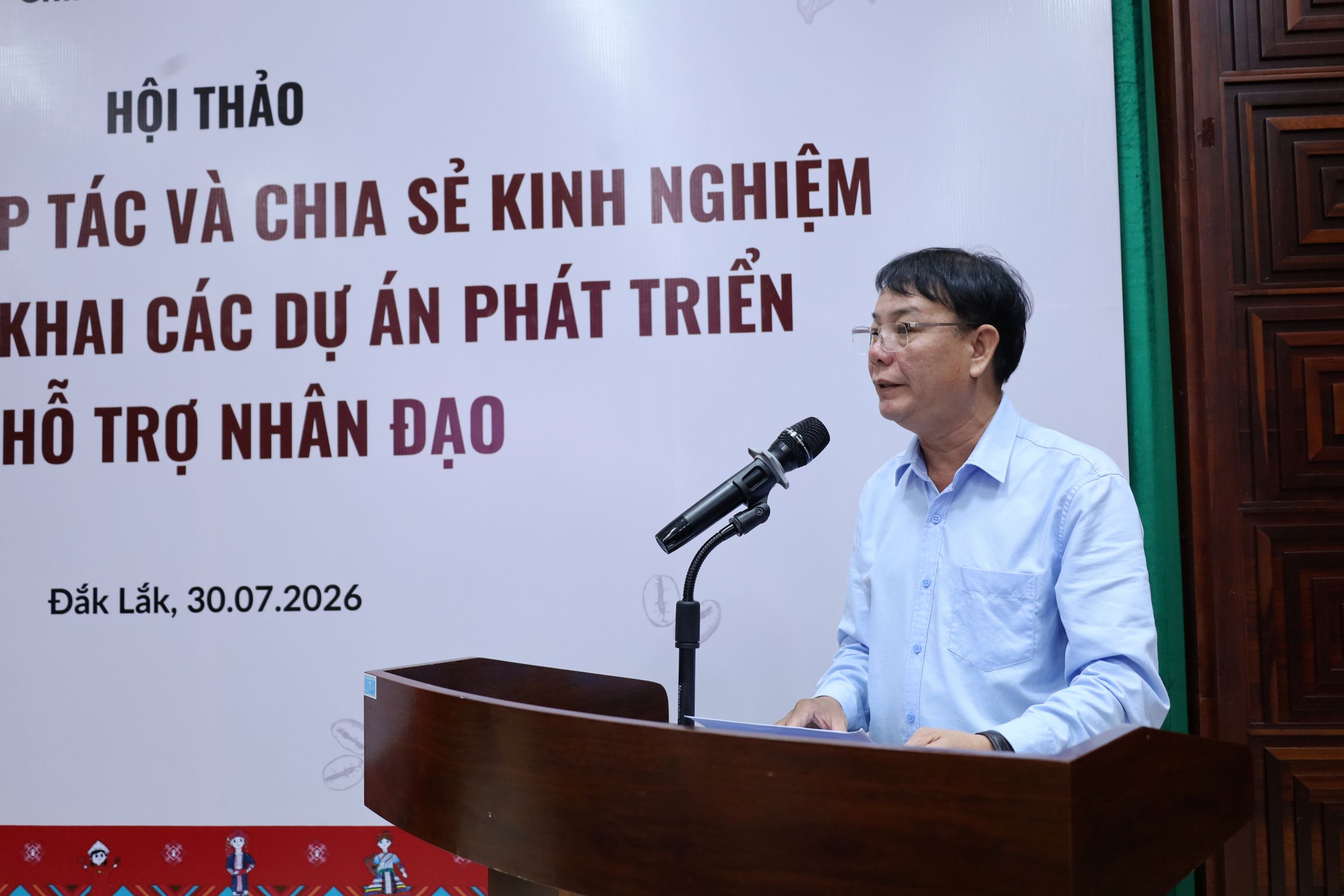
Mr. Bui Tien Loi, Head of the Foreign Affairs Division, Office of the Dak Lak Provincial People’s Committee, shares experience in cooperation between Dak Lak Province and Save the Children.
Presenting his paper, Mr. Bui Tien Loi, Head of the Foreign Affairs Division, Office of the Dak Lak Provincial People’s Committee, noted that after more than 10 years of partnership with Save the Children, the province had gradually developed a substantive and sustainable cooperation model centred on local development needs. He emphasized that effective partnerships should be built on four key foundations: responding to practical needs; engaging multiple stakeholders; prioritizing capacity-building rather than financial assistance alone; and fostering trust to expand long-term cooperation.
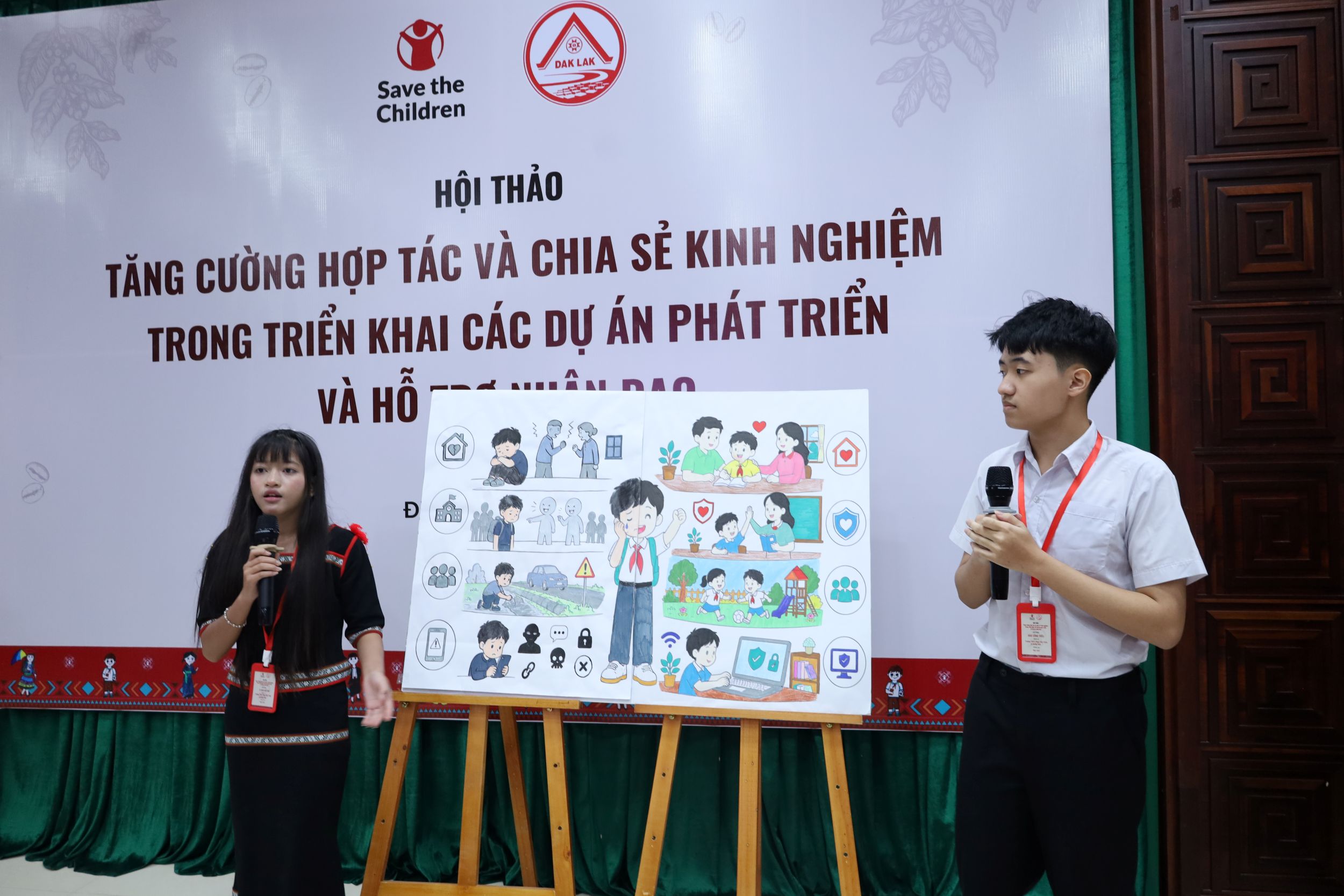
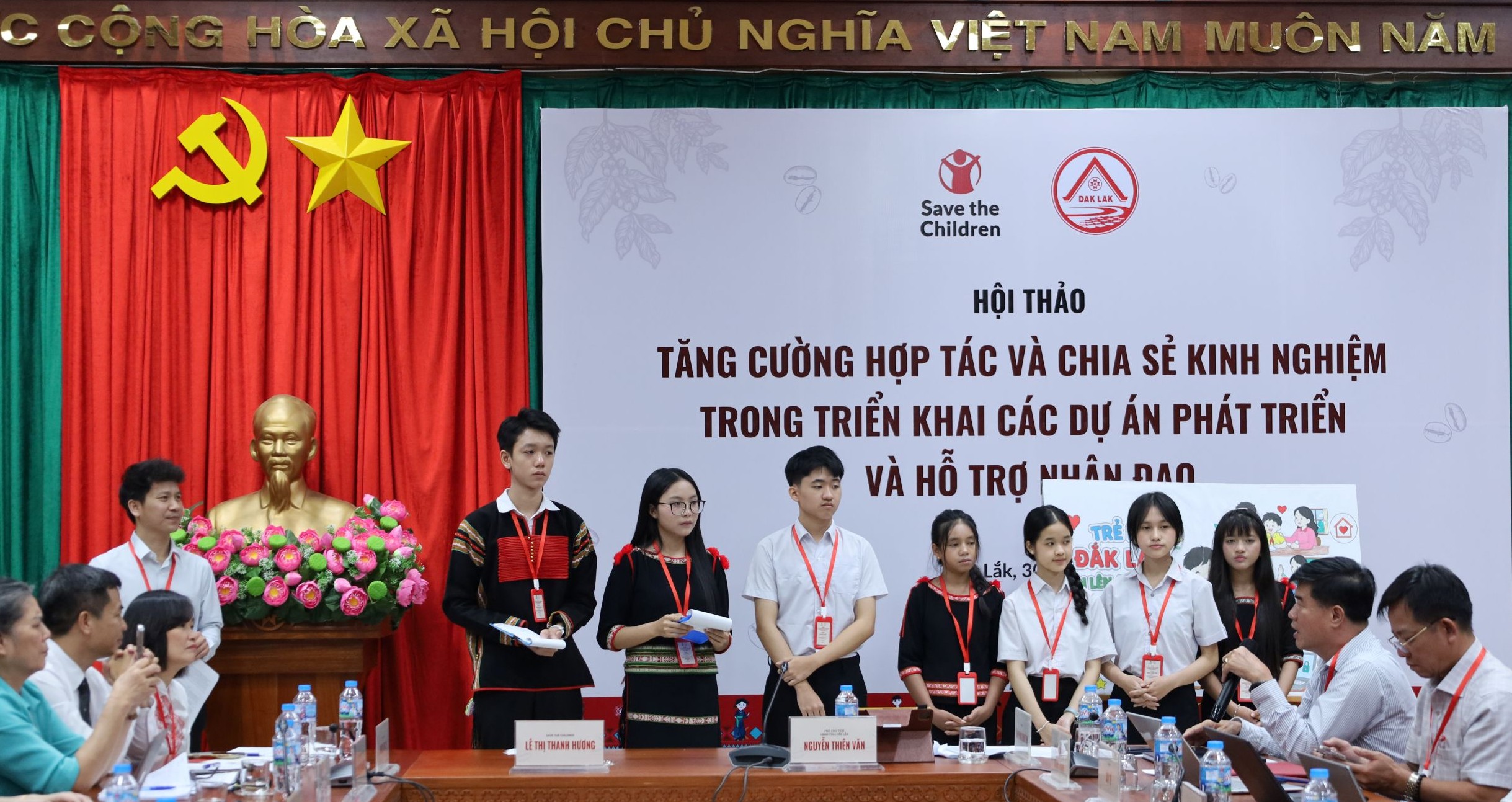
Students in Dak Lak Province share the outcomes they have experienced after participating in projects implemented by Save the Children International.
Notably, from early 2024 to June 2026, Dak Lak coordinated the implementation of nine aid packages with a combined value of nearly VND 68.8 billion, focusing on child protection, education, healthcare, school nutrition and humanitarian assistance. Various initiatives, including child protection in coffee production, improvements in clean water and school sanitation, inclusive education, and maternal and newborn healthcare, have delivered tangible benefits to local communities.
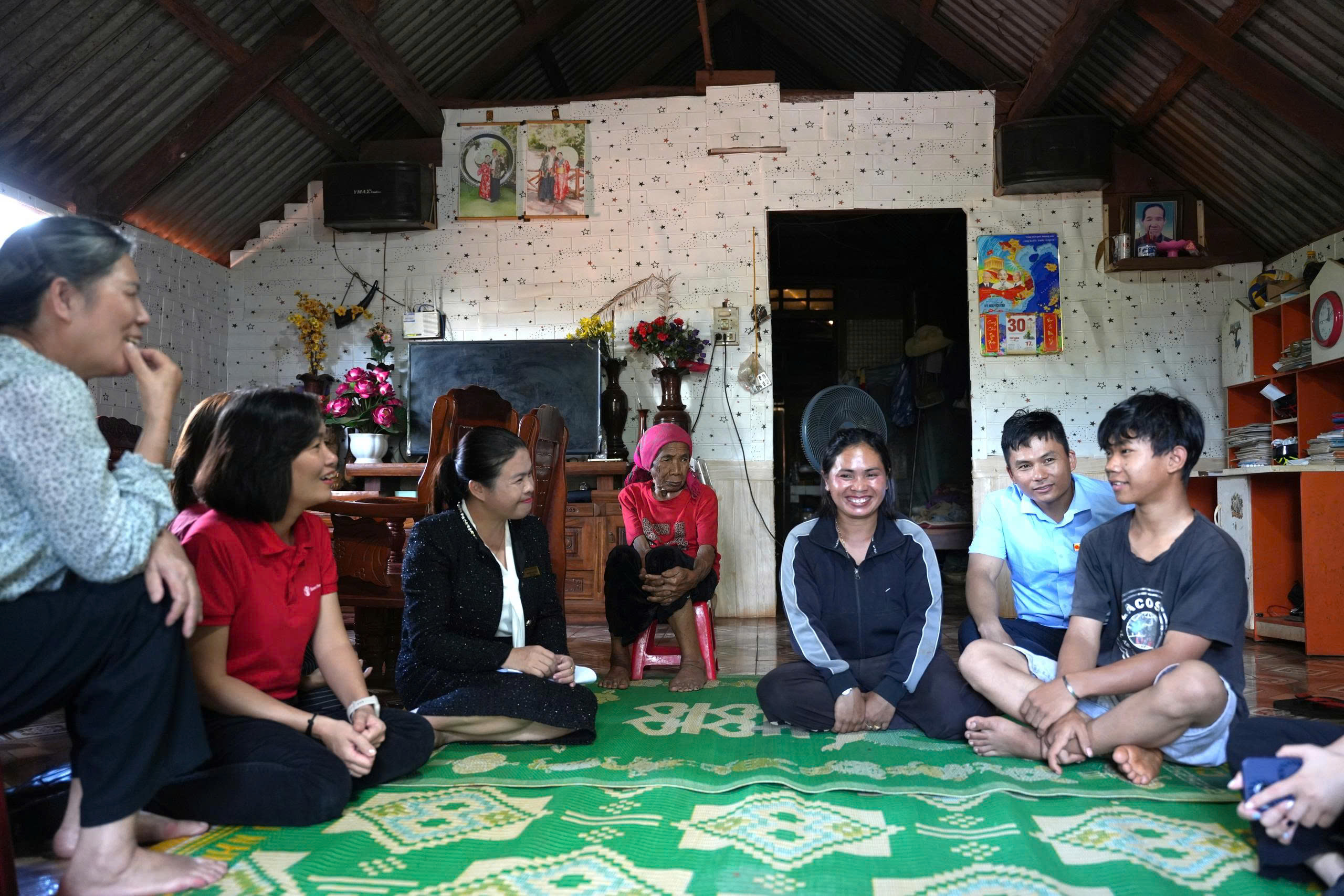
The Save the Children delegation, together with central and local partners, visits the family of Ms. H My Mlo in Kdro Hamlet, Krong Buk Commune.
Building on these achievements, Dak Lak aims to shift from a project-seeking mindset to proactively building development partnerships, thereby mobilizing more effectively the engagement of international organizations, businesses and communities in addressing local development challenges.
During the 2026–2028 period, Dak Lak Province and Save the Children International (SCI) will continue to expand their cooperation in a long-term and sustainable direction, placing children and local residents at the centre of their efforts. Priority areas include child protection, education, maternal and child healthcare, climate-resilient livelihood development, community capacity-building, and mobilizing additional resources from international partners and businesses to support the province’s sustainable development. The two sides will also strengthen knowledge cooperation, facilitate the transfer of international experience, and promote proven models and solutions.
Ministry of Foreign Affairs and Localities Propose Solutions to Unlock Resources
At the discussion session entitled “Unlocking Resources and Developing New Cooperation Models”, Ms. Nguyen Huyen Phuong, Head of the Foreign Non-Governmental Organizations Division under the Department of Foreign Affairs and Cultural Diplomacy of the Ministry of Foreign Affairs, stated that as of June 2026, 428 foreign non-governmental organizations had registered to operate in Viet Nam, with annual disbursements of aid exceeding USD 200 million. These organizations implement a wide range of programmes in social welfare, socio-economic development, healthcare, education, environmental protection and capacity-building.
According to the Ministry of Foreign Affairs representative, as traditional aid to Viet Nam shows signs of declining, diversifying resources has become an urgent priority.
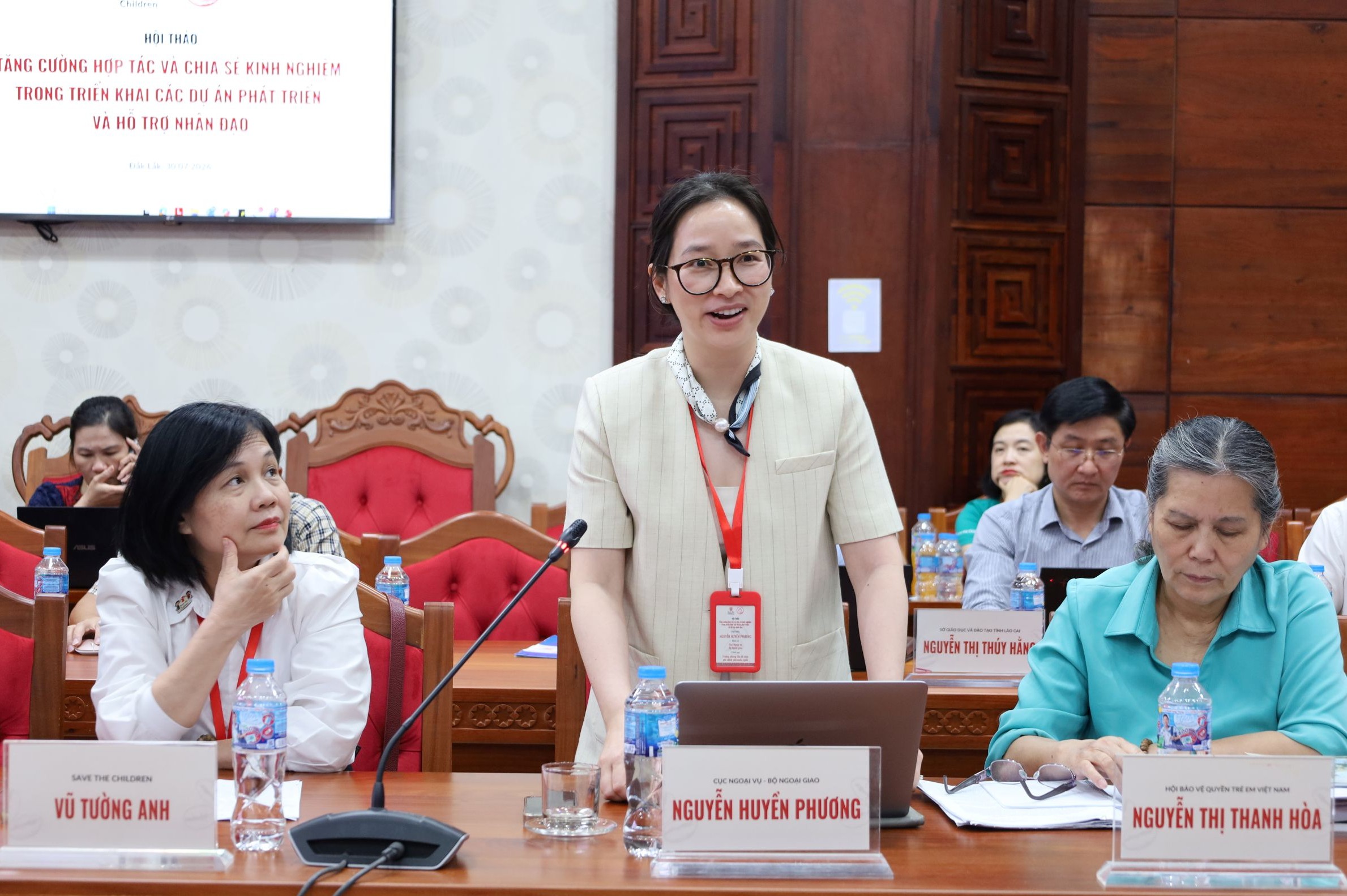
Ms. Nguyen Huyen Phuong, Head of the Foreign Non-Governmental Organizations Division under the Department of Foreign Affairs and Cultural Diplomacy, shares orientations for strengthening cooperation and mobilizing resources for development programmes.
The Ministry of Foreign Affairs called on local authorities to move beyond a funding-only approach towards integrating multiple sources of support; incorporate projects more closely into local development plans; and broaden the participation of businesses, social funds, communities and children themselves to ensure programme sustainability. The Ministry also reaffirmed its commitment to helping localities connect with international aid sources and address difficulties relating to external affairs procedures, thereby facilitating the effective implementation of cooperation programmes.
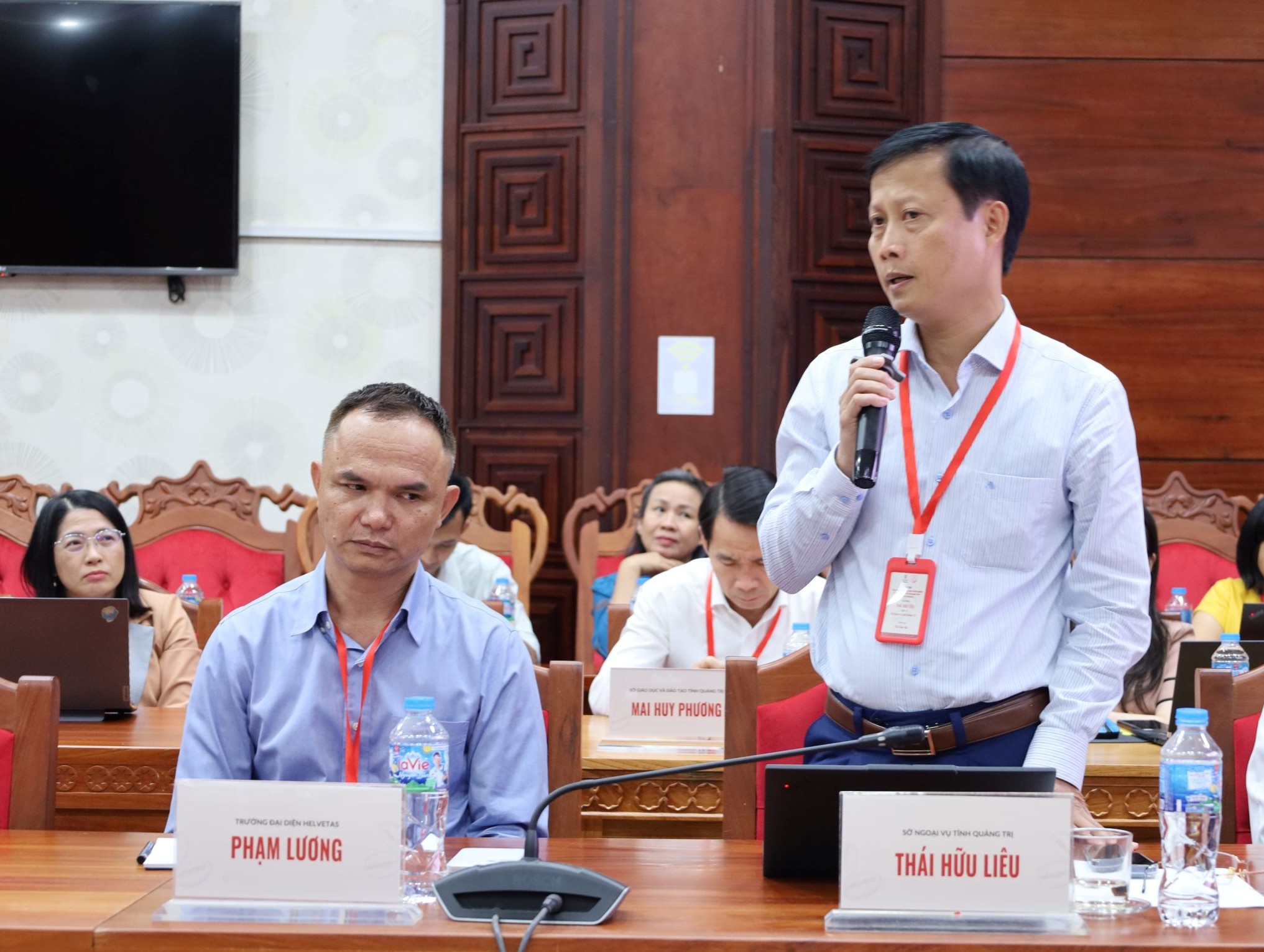
Mr. Thai Huu Lieu, Deputy Director of the Department of Foreign Affairs of Quang Tri Province, shares experience in implementing development projects and humanitarian assistance.
The workshop’s final discussion session also featured contributions from ministries, agencies, local authorities, businesses and development organizations on measures to strengthen coordination, mobilize social resources and develop cross-sectoral cooperation models, with the shared goal of improving children’s quality of life and promoting sustainable community development.
Save the Children is one of the world’s leading international organizations dedicated to advancing children’s rights and well-being. Founded in 1919, the organization currently operates in more than 100 countries worldwide. In Viet Nam, Save the Children works across 16 provinces and cities, focusing on education, health and nutrition, child protection, child rights governance, poverty reduction for children and adolescents, disaster risk reduction, and climate change response. In implementing its programmes, Save the Children works closely with government agencies, social organizations, the private sector and research institutes.
Lê Nữ Hoàng Anh
No comments yet. Be the first to comment!
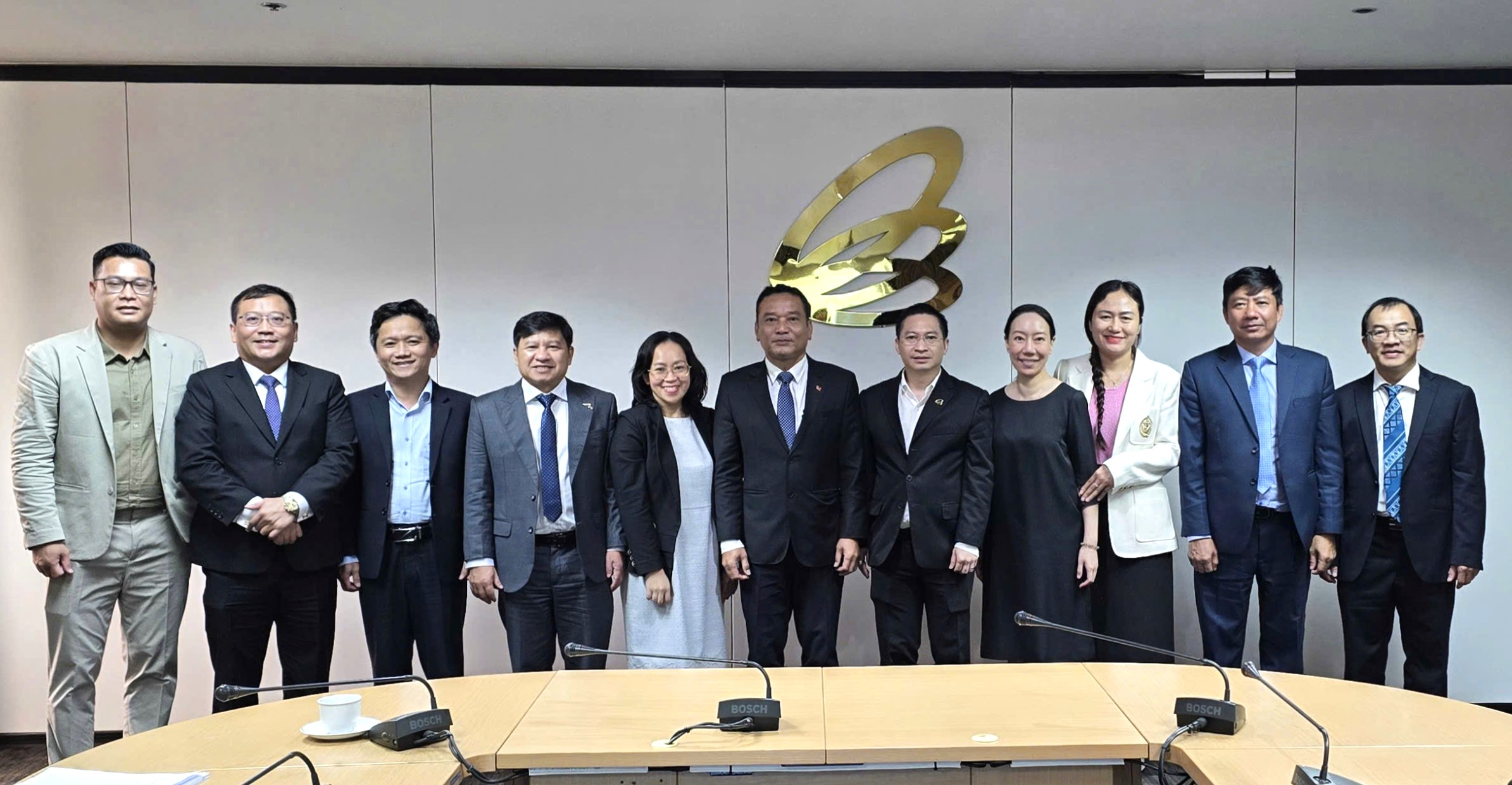
Dak Lak calls for Thai investment, seeks to expand markets for agricultural products
Dak Lak expands cooperation opportunities with Thailand’s BJC Group
Strengthening Cooperation and Diversifying Resources for the Sustainable Development of Children

Today:
Yesterday:
This Week:
Total: