Dak Lak expands cooperation opportunities with Thailand’s BJC Group
Cập nhật lúc: 02/11/2026 39
On the afternoon of November 2, during a working trip to Thailand, a delegation from Dak Lak Province met with senior executives of BJC Group to discuss investment cooperation, distribution network development, and ways to expand markets for the province’s agricultural products. The delegation was led by Mr. Y Giang Gry Nie Knong, Deputy Secretary of the Provincial Party Committee and Chairman of the Vietnam Fatherland Front Committee of Dak Lak Province.
Receiving the delegation were Mr. Aswin Techajareonvikul, CEO and Chairman of BJC BigC, who is also Chairman of the Members’ Council of MM Mega Market (Vietnam) Co., Ltd.; and Ms. Tran Kim Nga, Member of the Members’ Council and Head of External Relations at MM Mega Market.
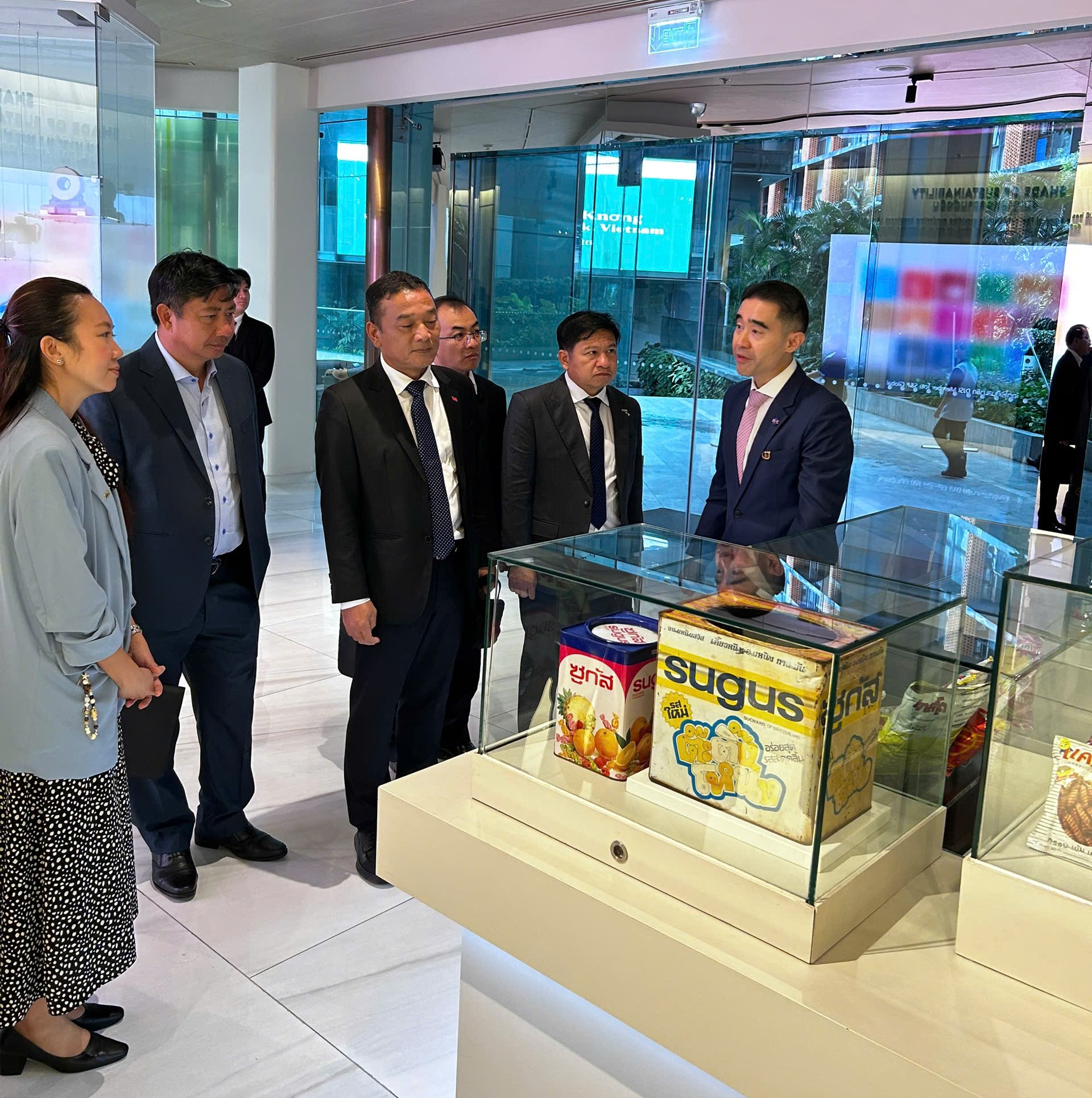
The Dak Lak delegation tours BJC’s operations and distribution system in Thailand.
BJC is a long-established, diversified conglomerate in Thailand. Its main businesses include real estate; insurance and financial services; agriculture and industry; food and beverages; trading; consumer goods manufacturing; and distribution and retail.
In retail, BJC operates the Big C chain in Thailand and has expanded across Southeast Asia, including Vietnam, where it runs the MM Mega Market system.
At the meeting, the Dak Lak delegation presented the province’s potential and strengths. Covering about 18,096 square kilometers and home to roughly 3.35 million people, Dak Lak links the Central Highlands with the South Central Coast. This position offers favorable conditions for developing consumer markets, logistics, and agricultural supply chains.
The province has 826,834 hectares of agricultural production land, including about 79,605 hectares of fruit trees. Several crops are grown on a large scale with high output: durian covers 41,821 hectares, with an output of 446,214 tons; coffee covers 217,654 hectares, with 580,830 tons; and pepper covers 28,804 hectares, with 78,745 tons.
As of October 21, 2026, Dak Lak had 469 approved growing area codes and 84 packing facilities with registered codes. For durian alone, the province has 420 growing area codes covering more than 11,572 hectares, along with 70 export packing facilities.
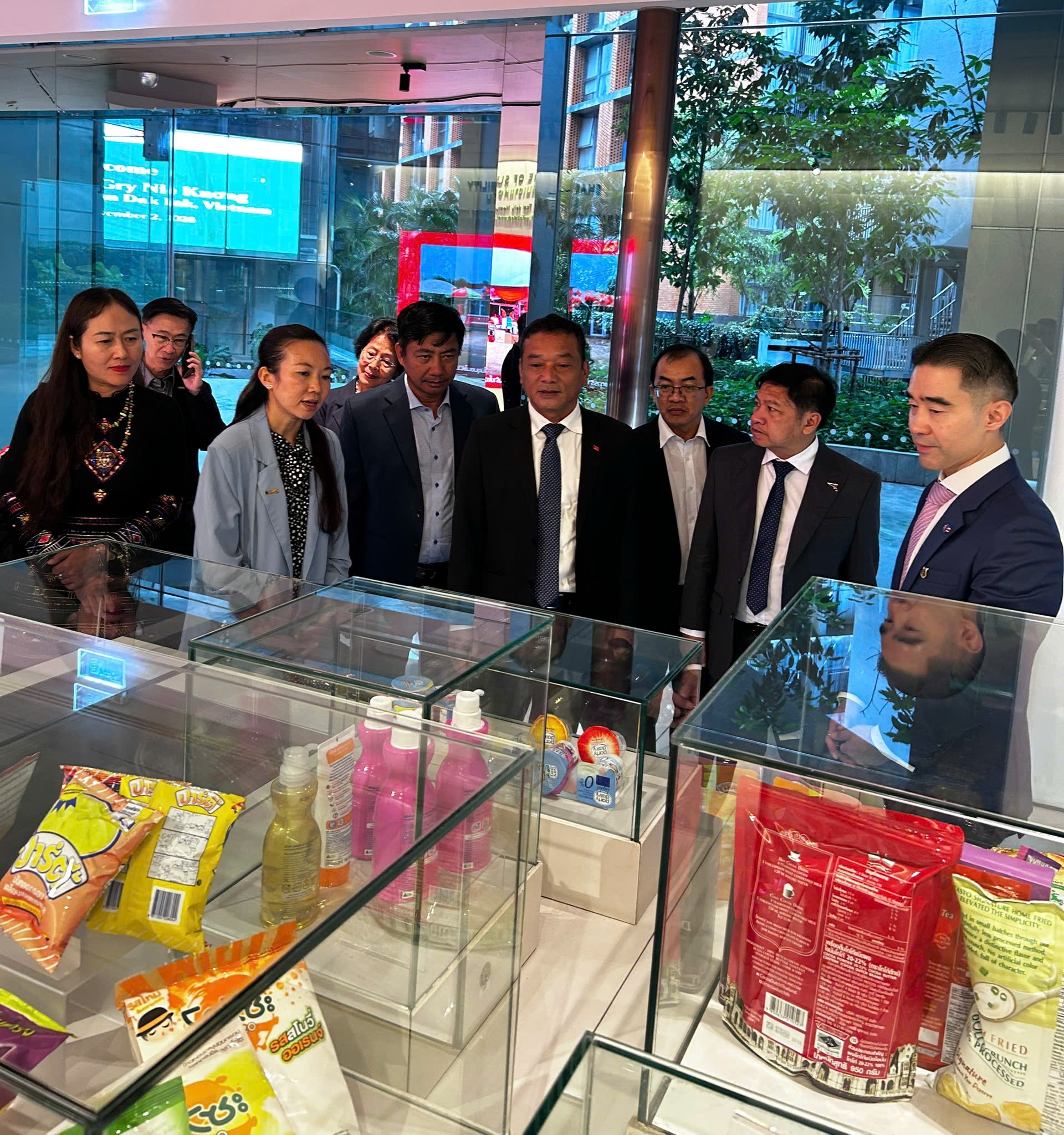
BJC executives introduce the group’s product lines and business areas to the Dak Lak delegation.
Speaking at the meeting, Mr. Y Giang Gry Nie Knong praised BJC’s experience and capacity, particularly in trading, distribution, and retail. He expressed hope that the two sides would promote cooperation in areas of mutual strength that fit Dak Lak’s development orientation.
Specifically, the province invited the group to consider investing in a hypermarket in Dak Lak. It also asked BJC to share its criteria for site selection, as well as its requirements for land area, infrastructure, and logistics, so that both sides can conduct joint field surveys. On distribution, Dak Lak hopes to bring its agricultural and processed products into BJC’s retail system, first in Vietnam, and then gradually in Thailand and other suitable markets.
Mr. Y Giang Gry Nie Knong stressed that Dak Lak has abundant agricultural raw materials. Besides its key products such as coffee, durian, and pepper, the province also has large areas of vegetable production. Connecting these products to BJC’s distribution system would create a more stable market, help farmers expand production, and increase the value of their produce.
He also invited BJC to consider investing in manufacturing and deep processing facilities in the province. This would make better use of local raw materials and add value to Dak Lak’s products.
In addition, he spoke about the province’s energy potential and its plans to attract investment in this sector. Dak Lak is currently focusing on building expressways to improve connectivity, which will make it easier to move goods and link with industrial parks. These advantages, he said, create favorable conditions for businesses to explore investment, production, and business opportunities in the province.
He also affirmed that Dak Lak will direct its specialized agencies to work with BJC by providing information on planning and available land, and by introducing capable businesses, cooperatives, and suppliers that meet the group’s standards. He warmly invited BJC’s leadership to visit Dak Lak for a closer look at cooperation opportunities.
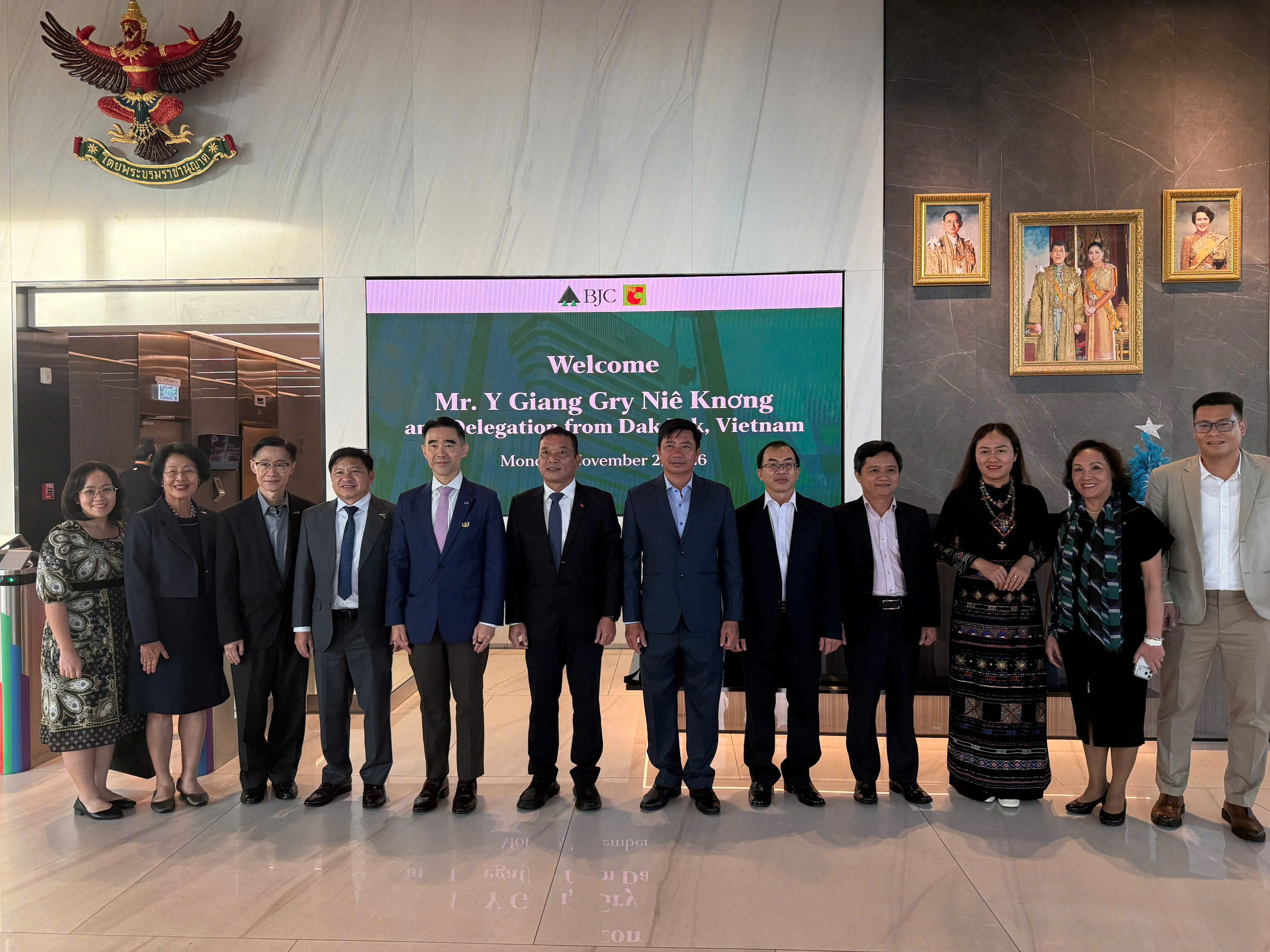
The Dak Lak delegation and BJC executives pose for a group photo after the meeting.
BJC representatives spoke highly of Dak Lak’s economic potential, agricultural strengths, and strategic position within the region, and took note of the province’s proposals. The group expressed its wish to continue exchanging information and learning more about market demand and local conditions, with a view to identifying suitable areas of cooperation in the near future.
Thanh Huyen
No comments yet. Be the first to comment!
Dak Lak calls for Thai investment, seeks to expand markets for agricultural products
Dak Lak expands cooperation opportunities with Thailand’s BJC Group
Strengthening Cooperation and Diversifying Resources for the Sustainable Development of Children

Today:
Yesterday:
This Week:
Total: